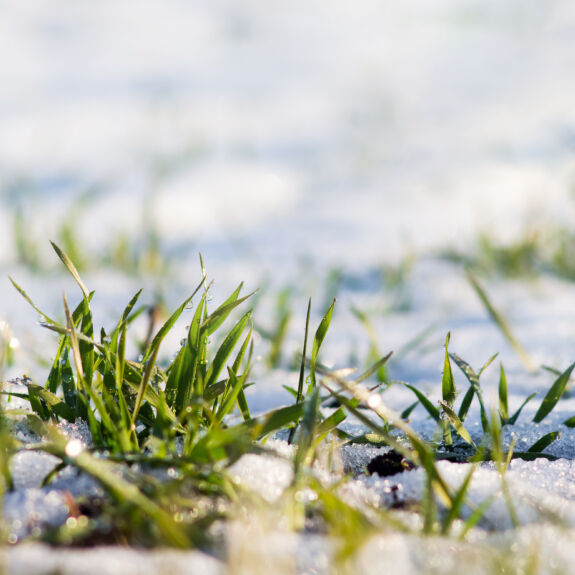
Maintaining your lawn month by month is the best way to achieve a thick, green, and resilient lawn all year long. Each season requires specific actions: inspection, fertilization, aeration, weed or insect treatments, and general upkeep.
This practical guide offers a simple, clear calendar so you know exactly what to do each month, including winter.
March: Gently waking up the lawn
March marks the transition between winter and the first maintenance activities. The soil is still fragile, but it’s the ideal time to:
- Observe areas damaged by frost.
- Clear debris gently, without raking too hard (grass blades are still sensitive).
- Spot dead patches that can be overseeded later.
It’s also a good moment to check for thatch. A compact lawn will greatly benefit from spring aeration.
April: Active soil preparation
In April, the lawn begins growing again. You can:
- Do a full cleanup of the yard.
- Mow lightly to even things out.
- Check soil condition, especially pH, before adding lime.
- Plan the first fertilization of the season.
Vertdure recommends a fertilizer designed to boost spring growth and prepare the lawn for summer heat.
If the soil pH is low, applying calcium helps balance the soil and strengthen lawn resilience.
May: The strategic month for weeds
With milder temperatures, the first weeds appear: dandelion, plantain, oxalis, clover…
This is the ideal moment to:
- Monitor areas being overtaken.
- Apply a selective weed control treatment.
- Overseed thin spots to densify the lawn.
- Adjust mowing height to between 6 and 8 cm to promote deeper roots.
For more details, check out our complete guide to identifying weeds.
June: Peak growth and insect prevention
June is a month of vigorous lawn growth, but it’s also when many harmful insects become active.
Here’s what to do:
- Mow higher (around 8 cm).
- Water deeply (2.5 cm per week including rainfall).
- Watch for insects such as chinch bugs.
Vertdure offers targeted treatments to protect your lawn. A soil inspection is also recommended to detect white grubs.
July: Protecting the lawn during heat
In midsummer, the lawn undergoes significant stress. To maintain its health:
- Avoid mowing too frequently, especially during heat waves.
- Water early in the morning to reduce evaporation.
- Do not apply fertilizer during very hot periods.
- Inspect the lawn for white moths, a sign of sod webworms.
Minimal but regular care helps the lawn stay green despite the heat.
August: The start of regeneration
Beginning in August, the lawn starts breathing again. This is one of the most important times of the year to improve lawn quality.
To do:
- Soil aeration.
- Overseeding bare areas.
- Richer fertilization to prepare for fall.
- Inspection of problem zones.
September: The best month to revitalize your lawn
September is considered by experts to be the most effective month for lawn care.
It’s the ideal time to:
- Apply fall fertilizer.
- Aerate (if not done in August).
- Treat perennial weeds.
- Seed or overseed the lawn.
Cool temperatures and natural moisture create perfect conditions for strengthening roots and thickening the lawn.
October: Transition to winter
October is a transition month. Here’s what to do:
- Gradually reduce mowing height.
- Remove fallen leaves to prevent fungal diseases.
- Apply calcium if the soil pH requires it.
It’s also a great time to perform a full assessment of your lawn’s condition.
November: Preparing the lawn for snow
The final mowing should be shorter (about 1.5 inches) to reduce the risk of snow mold.
You can also:
- Pick up any remaining leaves
- Ensure the yard is clean and well-drained
- Identify zones to monitor in spring
These simple actions help ensure better regrowth in March and April.
December to February: Winter lawn care
Even though the lawn rests under the snow, some precautions matter:
- Avoid walking on frozen grass, which can damage the blades.
- Prevent excessive buildup of compacted snow.
- Never break the ice crust with a shovel or heavy tool.
Fall care has a major impact on spring lawn health.
When should you call Vertdure?
Some situations require professional expertise:
- Recurring weeds
- Visible insects or yellow patches
- Compacted soil or poor drainage
- Unstable pH despite your efforts
- Persistent dead or bare areas
Vertdure offers a full range of services to keep your lawn healthy season after season.
Regular care: The key to a long-lasting lawn
A healthy lawn is built month by month. Each season brings its challenges, but with the right actions and the support of a specialized team, you can achieve a dense, green, and durable lawn. Vertdure provides professional services tailored to local conditions to support you all year long.
Related articles

Spring Checklist: 10 Actions to Gently Wake Up Your Lawn
Bring your lawn back to life this spring! Discover our 10-step checklist to promote healthy growth and achieve a lush, green lawn all summer long.

Fall Lawn Care: Complete Guide
Prepare your lawn for winter: mowing, watering, fertilizing, and aerating. Follow our complete fall lawn care guide.