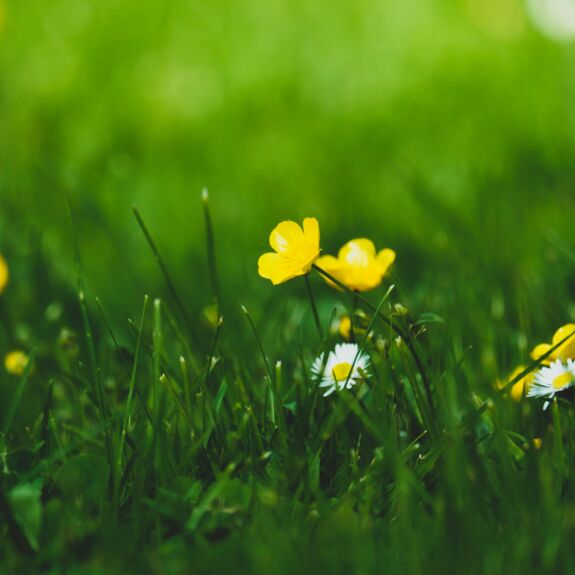
With the arrival of spring, spring lawn care becomes a priority to restore a healthy, green lawn after winter. A well-maintained lawn in spring ensures vigorous growth throughout the season and helps prevent issues like weeds and diseases.
This guide will help you incorporate effective practices into your spring routine.

Why is spring lawn care essential?
Winter often leaves its mark on the lawn: compacted soil, thatch buildup, weed growth, and weakened roots. Proper lawn care in the spring helps rejuvenate the turf, stimulate growth, and prepare it for the summer’s challenges. Early weed control in spring is crucial to prevent their spread and maintain turf density.
01. Spring cleaning
Before any treatment, start by cleaning the lawn:
- Remove debris: branches, dead leaves, and other winter residue
- Lightly rake to remove clippings and surface thatch
- Check for damaged areas needing overseeding
02. Aeration: A key step for healthy soil
As explained in our previous article on lawn aeration, this practice is essential to maintain lawn health. An aerated lawn absorbs water and nutrients more efficiently, making it more resistant to disease and drought. Aeration is especially important for clay or compacted soils due to frequent foot traffic or equipment use. This process reduces soil density, strengthens root anchoring, and promotes optimal grass growth.
It’s best to aerate once a year, ideally in spring or fall, when the soil is moist but not saturated. After aeration, applying a light topdressing helps enrich the soil and improve moisture retention.
Vertdure offers aeration services tailored to your lawn’s needs, as part of comprehensive maintenance packages.
03. Spring fertilization: An essential nutrient boost
As we outlined in our fertilization guide, applying the right fertilizer is key to keeping your lawn healthy. In spring, grass needs extra nutrients to recover from winter and kickstart growth. Fertilizing improves lawn density and strengthens resistance to weeds and disease.
Vertdure provides fertilization services with slow-release professional-grade fertilizers, customized to each lawn's specific needs.
04. Weed and thatch control
Spring is the best time to prevent weed outbreaks and reduce excessive thatch buildup.
- Treat weeds early with eco-friendly solutions
- Remove thatch thicker than 1 cm using a dethatcher
Vertdure offers effective weed control services that preserve the lawn’s natural balance.
05. Overseeding thin areas
Spring is ideal for overseeding or restoring lawn areas damaged by winter. Thin patches may result from cold, insects, disease, or general wear and tear. For fast, even regrowth, use seed varieties suited to your soil and climate.
A highly effective solution for restoring damaged lawns is hydroseeding, a service provided by Vertdure. This method sprays a blend of seed, fertilizer, and mulch over the lawn to ensure optimal germination and moisture retention. Hydroseeding is especially beneficial for large areas or hard-to-reach spots, providing even coverage and fast results.
06. Spring watering: A strong start to the season
Watering is a key part of spring lawn care, helping roots grow deeper and supporting optimal grass growth. Water plays a crucial role in nutrient absorption and photosynthesis. It’s best to water your lawn early in the morning, before the sun gets too strong, to reduce evaporation and ensure proper water penetration into the soil.
The ideal amount of water is about 2.5 cm per week, which can be measured using a rain gauge or a shallow container placed on the lawn. Watering too often and too lightly can lead to shallow root development, making your lawn more vulnerable to drought. On the other hand, overwatering can wash away nutrients and promote fungal disease.
- Favour deep watering over frequent, shallow ones.
- Water early in the morning to reduce evaporation and improve absorption.
- Check soil moisture regularly to avoid overwatering.
07. Mowing: Best practices for a healthy lawn
Proper mowing encourages thicker, stronger turf.
- Mow to about 6 cm in spring to promote deep rooting
- Avoid cutting too short to reduce stress and weed invasion
- Leave grass clippings on the lawn to naturally fertilize it
08. Protection against insects and diseases
Spring also brings the return of harmful lawn insects like white grubs, chinch bugs, and sod webworms. These pests feed on roots and blades, causing yellow patches and weakening the turf.
To prevent infestations, follow good maintenance habits: balanced fertilization, proper mowing, and early detection. Eco-friendly treatments like nematodes for grubs are excellent alternatives to chemical pesticides.
Monitor for fungal disease signs (brown patches, thinning turf). Regular aeration and proper watering reduce disease risks.
Vertdure offers pest control services tailored to your lawn’s condition. For severe infestations, consult a lawn care specialist for diagnosis and treatment.
A strong spring lawn care routine ensures a healthy, vibrant lawn all year long. By adopting these best practices and using Vertdure’s professional services, you’ll enjoy a dense, green lawn that withstands summer stress.
Related articles
When Should I Mow the Lawn After Winter?
Although you do not need to mow the lawn in winter, it’s important to know when it is the right time to mow your grass in spring.

Spring Checklist: 10 Actions to Gently Wake Up Your Lawn
Bring your lawn back to life this spring! Discover our 10-step checklist to promote healthy growth and achieve a lush, green lawn all summer long.