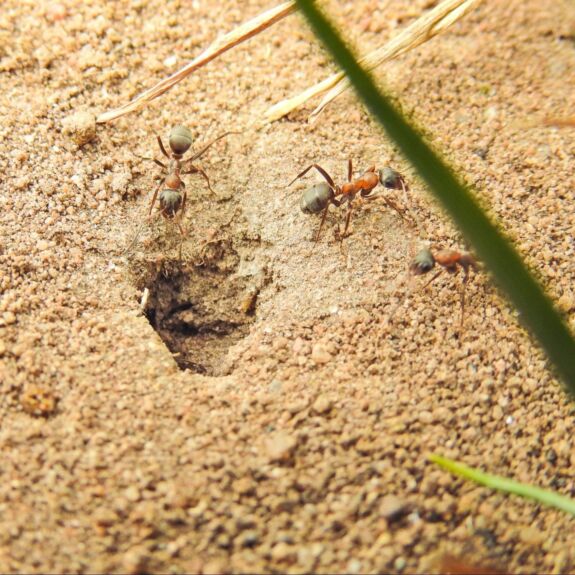
Ant nests are among the most common problems found on residential lawns. Although these small insects play a useful role in the ecosystem, their excessive presence can quickly become bothersome, or even harmful to your grass. If you’ve noticed several small mounds of soil scattered across your lawn, it’s time to act before the situation worsens.
Why do ant nests appear on your lawn?
Ant nests usually form in sandy, well-drained, and sunny soils. These conditions provide the perfect environment for ants to dig their tunnels and raise their colonies. They often choose weakened or bare areas of the lawn where the soil is easier to access.
Some species, like field ants, build their nests above ground, creating visible sandy mounds. Others, more discreet, dig underneath the grass and gradually displace the soil, creating uneven patches that affect the lawn’s appearance and health.
The most common causes of their presence include:
- Dry or compact soil
- Thin or damaged grass
- A large presence of insects they feed on (such as aphids)
- Lack of soil maintenance or aeration
What effects do ant nests have on your lawn?
A small number of ant nests may go unnoticed. However, as colonies multiply, they alter the structure of the soil. The sandy mounds cover the blades of grass, blocking sunlight and growth, leading to yellowing patches.
In addition, the underground tunnels weaken the root system, making the grass more vulnerable to drought and other pests. Aesthetically, multiple ant nests give your lawn an uneven and neglected look. Some species may even invade your home in search of food, making the problem worse.
How to recognize ant nests on your property
Ant nests are easy to spot when they’re above ground: small piles of sand or fine soil often appear near walkways, pavers, or in the middle of the lawn. On closer inspection, you’ll see tiny openings where ants come and go.
Sometimes, nests develop below the surface without visible mounds. In these cases, you may notice uneven ground, soil depressions, or sparse grass in certain areas. If you observe heavy ant activity in a specific area, it’s best to contact a professional to confirm the presence of an active colony.
When to call a professional
If ant nests keep multiplying or reappearing just days after a DIY treatment, it’s time to reach out to a specialized company like Vertdure.
Technicians can identify the species and select the proper treatment. Certain types—like carpenter ants—must be eliminated quickly, as they can cause structural damage around the home.
Calling Vertdure ensures a precise diagnosis and a customized treatment plan using products that are safe for children, pets, and the environment.
The role of Vertdure’s professional treatment
Professional treatments effectively control ant colonies while preserving your lawn’s health. At Vertdure, our experts follow a detailed process:
- Assessment of the property to locate all ant nests and determine the level of infestation
- Selection of the most suitable treatment, based on soil type and grass density
- Targeted application of eco-friendly and safe products to eliminate the colony at its source
- Personalized advice to prevent new ant nests from forming
With over 30 years of expertise, Vertdure provides sustainable solutions that restore the beauty and natural balance of your lawn.
Preventing the return of ant nests
After treatment, a few good maintenance habits can help prevent ant nests from coming back:
- Fertilize regularly to keep your grass dense and healthy
- Aerate the soil once or twice a year for better balance
- Repair bare patches with overseeding or hydroseeding
- Maintain an ideal mowing height between 6 and 8 cm (2.5–3 inches)
- Avoid leaving sugary foods or crumbs outside, as they attract ants
A well-maintained lawn is the best way to naturally prevent infestations and reduce the risk of multiple ant nests.
Key takeaways
Ant nests on your property often indicate an imbalance in the soil or a weakened lawn. While ants do contribute to natural soil aeration, an overpopulation can harm your grass’s health and appearance.
To prevent the situation from worsening, it’s important to act quickly. Home remedies can help with small, localized problems, but only a professional treatment ensures safe and long-lasting results.
Restore a healthy, even lawn with Vertdure
Having several ant nests on your lawn doesn’t mean all is lost. With Vertdure’s expert help, you can restore your lawn’s beauty by eliminating colonies and strengthening the grass.
Our trained technicians identify the cause of the infestation, apply the right treatment, and provide practical maintenance tips. This summer, don’t let ants take over your yard. Contact Vertdure today for a professional evaluation and enjoy a healthy, thick, and uniform lawn.