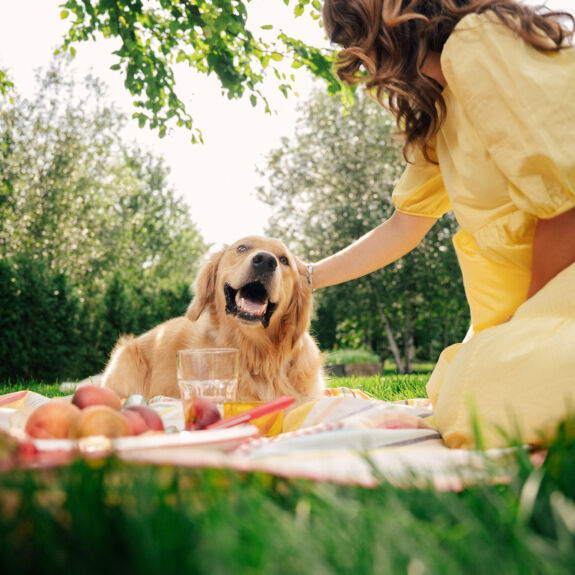
A lawn burned by dog urine can appear overnight: yellow patches, sometimes a drier center, and a greener ring around the edges. The good news is that you can repair it quickly and reduce recurrence with a few simple steps and a lawn care plan adapted to Quebec’s climate.
Understanding why urine “burns” grass
Urine contains mainly nitrogen and salts. In small amounts, nitrogen actually feeds the lawn (which is why you often see a greener ring around the spot). But in high concentration, it acts like an overdose fertilizer and dehydrates the grass blades: the lawn turns yellow and then dries out.
Factors that make damage worse
- Repeated spots in the same areas
- Compacted soil or slow drainage (urine stays concentrated)
- Heatwaves and lack of water (added stress)
- Short grass (less leaf surface to recover)
Quick diagnosis: is it really urine?
Before repairing, confirm the pattern matches urine damage:
- Round or oval shape, 10–40 cm
- Greener ring around the yellow center
- More common in summer or after dry periods
- Grass pulls out easily if the area is dead
Do not confuse with:
- Insect damage (irregular, spreading patches)
- Fungal disease (multiple spots, sometimes powdery or grayish appearance)
- General drought stress (more uniform yellowing across the lawn)
Fast repair in 24–72 hours (fresh spots)
If the urine is recent, the best immediate fix is dilution.
Simple steps:
- Water the area immediately for 2–3 minutes (goal: dilute and flush)
- Repeat once per day for 2 days if temperatures are high
- Avoid adding fertilizer to the spot (it can worsen damage)
Useful guideline:
Aim for about 1 cm of water over the area (without runoff).
Repairing a yellow patch: restoring the lawn step by step
If the grass is yellow but still alive, it can recover. If it is brown and pulls out easily, reseeding is required.
Case A: yellow but living grass
- Raise mowing height: 6–8 cm
- Water more deeply: about 2.5 cm per week (including rain), ideally in 2 sessions
- Lightly rake to lift blades and aerate the surface
- Wait 10–14 days before deciding the area is dead
Case B: dead grass, reseeding needed
- Remove dead area: scrape out dry grass down to soil
- Loosen soil: break up top 2–3 cm with a rake or hand cultivator
- Add a thin layer of soil: 0.5–1 cm of lawn soil, level with surrounding area
- Overseed: use a resistant grass mix (often fescue + bluegrass depending on sun exposure)
- Lightly compact: press with the back of a rake or walk gently for seed-to-soil contact
- Water lightly: 2–3 times per day in small amounts until germination, then less often but deeper
Key timelines:
- Germination: usually 7–21 days depending on variety and temperature
- First mowing: when grass reaches 8–10 cm, cut down to 6–8 cm
Best timing in Quebec for lasting repair
The easiest window for successful repair is usually:
- Late August to late September: cooler nights, less stress, stable moisture
- Spring: possible, but weed pressure and temperature swings can make establishment harder
If repairing in summer:
- Water consistently
- Keep mowing height higher
- Limit traffic on repaired areas
Preventing recurrence: simple habits that make a big difference
You don’t need to overhaul everything, the goal is to reduce concentration and repetition.
Dilute at the right time
- Water the area 30–60 seconds after urination when possible
- Be consistent during hot weather, quick dilution helps a lot
Change habits
- Rotate spots your dog uses
- Create a “dog zone” (mulch, fine gravel, or a designated area)
Strengthen the lawn
- Higher mowing: 6–8 cm to shade soil and reduce stress
- Deep watering: 2.5 cm per week instead of light daily watering
- Lawn aeration: once a year if soil is compacted or drainage is poor
- Regular overseeding: increases density and prevents patch expansion
Avoid common mistakes
- Do not over-fertilize: too much nitrogen + urine increases burn risk
- Do not scalp the lawn: very short mowing slows recovery
- Do not use lime or “miracle” products without diagnosis: the issue is concentration, not acidity
Lawn aeration: why it helps against urine burn
When soil is compacted, urine does not drain well and stays concentrated near the surface. Lawn aeration creates channels that:
- Improve drainage
- Encourage deeper root growth
- Help irrigation water flush salts more effectively
Signs aeration may be needed:
- Water pooling after rain
- Hard, compacted soil in high-traffic areas
- Thin lawn despite proper watering
Simple action plan based on your situation
If the spot is very recent
- Immediate dilution + light watering for 2 days
If the grass is yellow but weak
- Mow at 6–8 cm + water 2.5 cm/week + light raking
If the grass is dead
- Remove + add 0.5–1 cm soil + overseed + light frequent watering
If spots keep coming back
- Dedicated dog zone + lawn aeration + overseeding to increase density
Why choose Vertdure for a healthy lawn despite having a dog
When spots keep returning, there is often an underlying issue: compacted soil, thatch buildup, poor fertilization timing, or inefficient watering. Vertdure can help stabilize your lawn care with:
- Professional experts and equipment
- Complementary services (aeration, overseeding, fertilization)
- Personalized recommendations based on your soil and exposure
Contact us for a quote and tailored lawn care packages, because a dense, healthy lawn is more resistant, even with a dog.
Related articles
Yellow Lawn in Spring: 7 Common Causes in Quebec and What to Do
Find out why your lawn turns yellow in spring and learn simple fixes to address soil, water, and maintenance issues for healthier grass.
Sod Webworm: How to Protect Your Lawn?
Protect your lawn from the sod webworm: learn how to detect, prevent, and effectively treat this pest with the help of Vertdure’s experts in Quebec.