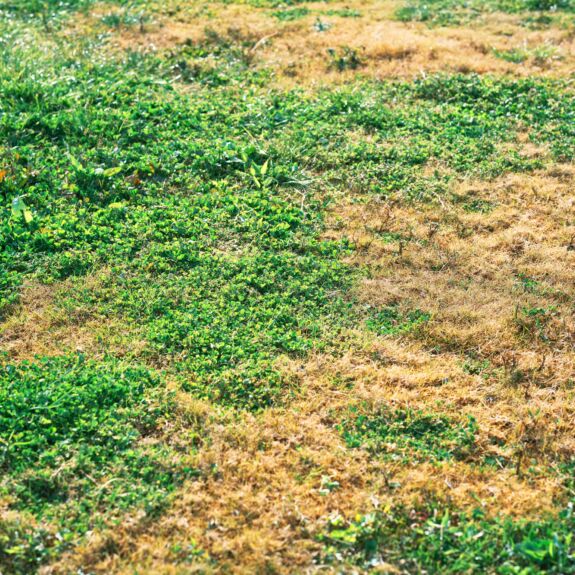
In spring, a yellow lawn is not necessarily “dead.” It is often grass that is simply stressed by winter, water, or soil conditions. With a proper diagnosis and a few lawn care steps, you can restart growth and bring back a dense, healthy, green lawn.
Quick diagnosis before acting (5 minutes)
Before applying any product, check the following:
- Pull test: Gently pull on yellow blades. If they come out easily with no roots, it may indicate winter damage or rot. If they resist, the lawn is often dormant or nutrient-deficient.
- Pattern of the damage: Road edges, walkways, low areas, full sun, under conifers… the pattern often reveals the cause.
- Soil condition: Push a screwdriver into the soil after snowmelt. If it is very hard, the soil is compacted. If water pools, drainage is the issue.
- Thatch (organic layer): A spongy layer that retains moisture can promote disease and yellowing.
The 7 most common causes in Quebec (and what to do)
01. Snow mold (fungal disease)
Signs: Yellow to light brown patches after snowmelt, sometimes with grayish or pinkish filaments, especially where snow stayed the longest.
Why it happens: Long snow cover, tall grass in fall, thatch buildup, stagnant moisture.
What to do:
- Lightly rake to aerate blades and speed up drying (without pulling grass out)
- Reduce thatch if the layer is thick (dethatching at the right time)
- Overseed if patches remain thin after 2–3 weeks of recovery
- Avoid early excessive nitrogen if the soil is still cold and wet
02. Winter damage and desiccation (wind, frost, sun)
Signs: General yellowing, especially in exposed areas (windy or sunny spots), burnt tips, slow recovery.
Why it happens: Freeze-thaw cycles, dry winds, roots still inactive early in spring.
What to do:
- Wait for recovery: once temperatures stabilize and soil warms, many areas green up naturally
- Mow high on the first cut: 6–8 cm to reduce stress
- Water only when needed: about 2.5 cm per week (including rain) once growth resumes
03. De-icing salt and abrasives (roads and driveways)
Signs: Yellow or burnt strip along sidewalks, driveways, or snow piles.
Why it happens: Salt dehydrates grass tissue and disrupts soil balance.
What to do:
- Flush early: water deeply as soon as possible once soil is no longer frozen
- Remove debris (sand, abrasives) that smother grass
- Overseed edges in spring and improve soil with a thin layer of compost
- Prevent next winter: use less aggressive de-icing alternatives
04. Mowing too short at spring startup (scalping)
Signs: Overall yellow lawn after the first cut, “bare” areas exposing crowns, uneven recovery.
Why it happens: Cutting too low removes too much leaf surface, forcing grass to restart from scratch.
What to do:
- Follow the one-third rule: never remove more than one-third of the height at once
- Recommended height: 6–8 cm in spring (higher during dry periods)
- Use a sharp blade: dull blades tear grass and cause yellow tips
05. Nutrient deficiency (especially nitrogen) or poor soil
Signs: Uniform pale yellow color, slow growth, low density, more visible after snowmelt.
Why it happens: The lawn is “hungry” after winter, especially without proper fertilization.
What to do:
- Fertilize at the right time: when active growth resumes (soil drained and first cuts done)
- Use a balanced spring fertilizer rather than a heavy application
- Improve soil with compost, overseeding, and proper lawn care practices
06. Compacted soil and poor aeration
Signs: Yellow areas on paths or high-traffic zones, water runoff, hard soil, shallow roots.
Why it happens: Compaction limits air, water, and nutrients from reaching roots.
What to do:
- Lawn aeration (core aeration): ideal for compacted soil
- Overseed after aeration: improves seed-to-soil contact
- Reduce foot traffic early in spring when soil is fragile
07. Poor drainage and excess water (low areas)
Signs: Yellow to brown patches, spongy soil, standing water, moss, humidity smell, spreading spots.
Why it happens: Too much water deprives roots of oxygen and promotes disease.
What to do:
- Do not water while soil is still saturated
- Improve grading or add organic matter to improve soil structure
- Aerate if soil is heavy and easily compacted
- Overseed once the area becomes workable and soil has dried
Simple 14-day action plan (no over-treating)
- Days 1–2: gentle cleanup
- Remove debris, sand, and leaves
- Lightly rake yellow areas (without pulling grass)
- Days 3–7: stabilize basics
- Mow at 6–8 cm if growth allows
- Avoid watering if soil is still wet
- Identify problem zones (salt edges, wet depressions, compacted areas)
- Days 8–14: restore density
- Perform lawn aeration if compaction or drainage is an issue
- Overseed thin areas
- Apply fertilizer once active growth resumes
When to call a lawn care professional
It is recommended to get an evaluation if:
- Yellow patches continue to expand despite warmer, drier weather
- Grass pulls out easily over large areas (weak roots)
- Water frequently pools or compaction is obvious
- You want a full plan: aeration, fertilization, overseeding, and seasonal problem control
At Vertdure, our experts use professional equipment and on-site diagnostics to identify the real cause (compacted soil, thatch, drainage, nutrient deficiencies) and recommend the right services. Get a quote or explore our lawn care packages to get your lawn back on track.
FAQ: yellow lawn in spring
Is a yellow lawn always dead?
No. In Quebec, many yellow areas are temporary after snowmelt. The pull test and patch pattern help determine the cause.
Should I fertilize as soon as the snow melts?
It is better to wait for active growth and drained soil. Too early, and the effect is limited or stressful for the lawn.
When should lawn aeration be done?
When the soil is no longer saturated and the grass is actively growing. It is especially useful for compacted soil or poor drainage.
Does overseeding help a yellow lawn?
Yes, especially if areas are thin after winter. It works best after aeration and with good seed-to-soil contact.