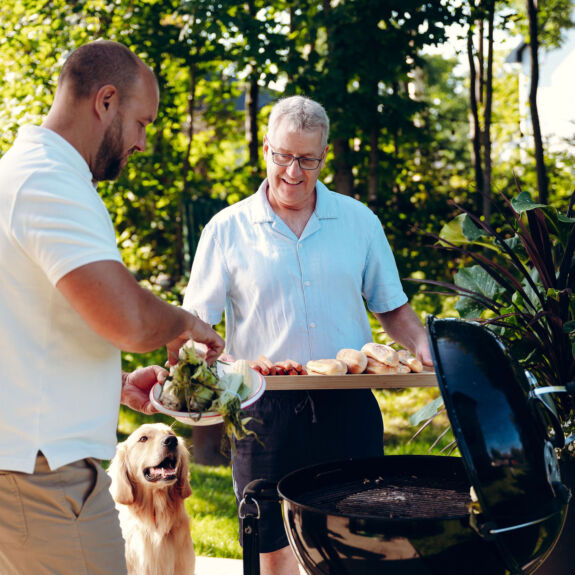
The party was a hit, but the next morning the lawn looks like it hosted the whole neighbourhood (which it sort of did). Flattened patches, browned footprints, a yellow square where the table or the BBQ used to sit. The good news? A lot of that grass is not dead, just crushed and stressed, and it will stand back up on its own. The rest is fairly easy to repair with the right steps.
In this article, we show you how to tell a simply trampled lawn from one that needs reseeding, and then how to repair the brown patches to get an even lawn back.
Flattened, stressed, or dead? Diagnose before you repair
Before you reach for the seed, figure out what kind of damage you are dealing with.
Flattened grass
Blades lying down, but still green at the base. It springs back up within a few days, especially after watering. Nothing to do but wait.
Stressed or compacted grass
Pale green to yellowed colour, hard soil underfoot in the high-traffic areas. It recovers if you loosen the soil and water; otherwise it thins out.
Dead grass
Brown, dry, brittle blades that come away when tugged, sometimes with bare soil. This needs reseeding through overseeding.
Two quick tests to settle it:
- The tug test: pull on a tuft. Green and well anchored, it is alive. Brown and lifting freely, it is dead.
- Wait 3 to 4 days: water and observe. Whatever was simply flattened will have greened back up; whatever stays brown needs repair.
The instinct is to fix everything the very next morning. Take a breath. Let the lawn show you what is actually dead before you seed anything.
Where brown patches come from after a party
Foot traffic
Dozens of steps in the same spot (around the table, on the path to the BBQ) crush the blades and compact the soil, especially in hot, dry weather.
Heat from the BBQ or a fire pit
A grill or portable fire pit set on the lawn will burn it within hours.
Objects left in place
An inflatable pool, cooler, table, or tent left for several days smothers the grass, which yellows from lack of light.
Spills
Beer, sugary drinks, alcohol, or cooking grease can burn or suffocate the grass in spots.
Repairing a brown patch step by step
01. Let It Breathe and Water It
Give the lawn 3 to 4 days and water the affected areas (about 2.5 cm of water over the week). Many simply flattened patches green back up on their own. You will then know exactly where the real work remains.
02. Loosen the High-Traffic Areas
Where the soil is hard, aerate. For a small area, a garden fork pushed in and rocked every 10 cm does the job. For larger traffic zones, lawn aeration (core aeration) is more effective. It gets air back to the roots and helps water soak in.
03. Prepare the Soil in the Dead Patches
For each patch to be reseeded:
- Remove the dead blades and debris.
- Scratch the surface 1 to 2 cm deep to loosen the soil.
- Add a thin layer of lawn soil or compost if the soil is poor, then level it.
04. Seed (Overseeding)
- Choose a grass mix suited to how much sun the area gets (full sun, partial shade, or shade).
- Spread the seed evenly, without piling it, for good contact with the soil.
- Cover with about 0.5 cm of topsoil to hold moisture and protect the seed.
05. Water for Germination
This is the step that makes or breaks the whole repair. Keep the surface constantly moist with light watering 1 to 2 times a day until it sprouts. Germination takes 7 to 21 days depending on the mix and the temperature.
06. Protect the Area
Avoid walking on the reseeded area for 3 to 4 weeks while the young blades take root. Do the first mow only when the new grass reaches 8 to 9 cm, with a well-sharpened blade.
The least glamorous secret to a successful overseeding is not the amount of seed, it is the watering: never let the surface dry out while it is sprouting.
Special cases
A burn under the BBQ or a fire pit
The area is often genuinely dead, and the soil sometimes "cooked." Remove it, add fresh soil, then seed it like a dead patch. In future, set the grill on a paver or on the patio.
A yellow square under an object (tent, pool, table)
If the grass only lost light for a few days, it often greens back up after a few days of sun and watering. Beyond a week without light, expect to reseed.
A spill (alcohol, grease, sugary drink)
Rinse generously with water as soon as possible to dilute it. If the patch dies anyway, treat it like a dead patch.
Handy reference points
- Recovery of flattened grass: 3 to 4 days
- Seed germination: 7 to 21 days
- Topsoil layer over the seed: about 0.5 cm
- Watering during germination: light, 1 to 2 times a day, keep moist
- Best window for lasting overseeding: late August to late September
- First mow of the new grass: at 8 to 9 cm
- No foot traffic: 3 to 4 weeks
Note: if your party was in the middle of July, you can repair right away, but it takes diligent watering to offset the heat. The easiest window for an overseeding that lasts is late summer (late August to late September): the soil is still warm, nights are cooler, rain is more regular, and there is less competition from weeds.
A 3-week action plan
- First week: water, let it green back up, identify the truly dead patches, then loosen the high-traffic areas.
- Second week: rake the dead patches, seed, cover with topsoil, and water 1 to 2 times a day.
- Third week: sprouting begins. Keep watering without letting it dry out, and stay off the area.
- After that, when your lawn is long enough: first mow at 8 to 9 cm, then ease back into a longer length.
When to call a professional
- The high-traffic areas compact every summer and the grass no longer holds there.
- Large areas need redoing, not just a few patches.
- The overseeding will not sprout despite good watering (poor soil, compaction, too much shade).
- You want to repair at the best time of year (late summer) with professional aeration and overseeding.
- The damaged grass is quickly overrun by weeds.
FAQ
Does trampled grass grow back on its own?
If it is simply flattened, yes, within a few days, especially after watering. If it is dead (brown, dry, lifting freely when tugged), it needs to be reseeded through overseeding.
How long does it take to repair a brown patch?
Germination takes 7 to 21 days, and the area is usable again after about 3 to 4 weeks, once the young blades have taken root.
When is the best time to overseed a lawn in Quebec?
Late summer, from late August to late September, is ideal: warm soil, cooler nights, regular rain, and few weeds. Overseeding in midsummer is still possible, but it calls for more diligent watering.
At Vertdure
Brown patches that come back every summer after the parties often hide compacted soil or grass too thin to take the traffic. At Vertdure, our experts assess your property on site to pinpoint the cause and recommend the right services: lawn aeration, overseeding, fertilization, and weed control, ideally at the best time of year. Get a free quote or explore our lawn care packages for a yard that is ready to host all summer long.