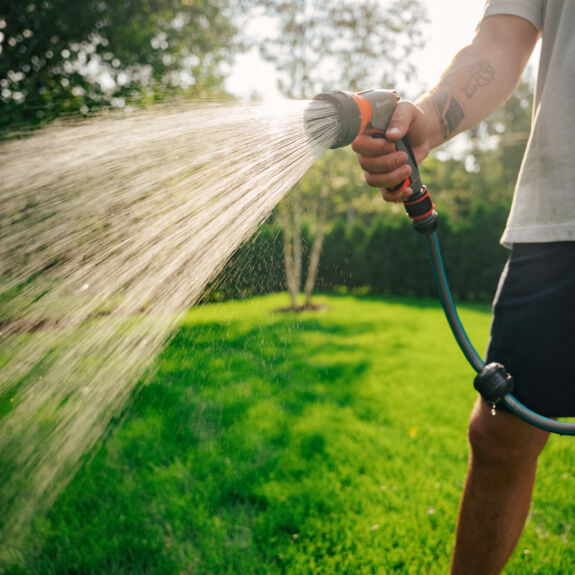
Watering at the right time can often make the difference between a green, dense, resilient lawn and grass that turns yellow, develops diseases, or wastes water. In Quebec, in most situations, the best time to water your lawn is early in the morning.
The best time: early morning (ideally between 5 a.m. and 9 a.m.)
Morning watering offers several concrete benefits for a healthy lawn:
- Less evaporation than in the middle of the afternoon: water penetrates the soil more effectively
- Foliage dries quickly with sunlight and air circulation: reducing the risk of fungal diseases
- Less stress on the lawn: hydration happens before peak heat
- Better efficiency: water reaches the roots instead of evaporating
Practical tip
If you use an irrigation system, it is recommended to schedule it just before sunrise.
Watering in the evening: possible, but less recommended
Watering in the evening (for example between 7 p.m. and 10 p.m.) may seem logical since temperatures are cooler. However, moisture tends to remain on grass blades for a long time.
More common risks associated with evening watering
- Fungal diseases (spots, patches, damp thatch)
- Moss development in shaded areas
- Soil staying overly wet when drainage is poor (water accumulation)
Situations where evening watering may be acceptable
- During heatwaves when morning watering is not possible
- If watering is done early enough to allow foliage to dry before nightfall (late afternoon)
What to avoid: watering in the middle of the afternoon
Between 11 a.m. and 4 p.m., especially during summer, watering is rarely effective:
- Water evaporates quickly
- Heat stress on the lawn increases
- High risk of under-watering (wet surface, dry roots)
How much to water for real results
Proper lawn care depends more on total quantity and frequency than on small daily watering sessions.
Simple guidelines
- Aim for about 2.5 cm (1 inch) of water per week, including rainfall
- Water 1 to 2 times per week deeply rather than 5–7 light sessions
- Prioritize deep watering to encourage deeper roots and better drought resistance
Signs of underwatering
- Grass turns bluish or gray-green
- Footprints remain visible after walking
- Yellow patches appear, especially in sunny areas
Adjustments based on your yard (very important)
Every lawn responds differently to watering:
- Sandy soil: more frequent watering, as water drains quickly
- Clay soil: slower, longer watering but less often to avoid standing water
- Shaded areas: reduced water needs to limit moss and disease
- Slopes: shorter watering cycles (e.g., 2–3 cycles) to prevent runoff
The “real” best time in one sentence
Morning is the best time to water your lawn because water penetrates the soil more effectively, the foliage dries afterward, and the risk of fungal diseases is reduced.
Going further and keeping a truly dense lawn
Efficient watering works best when combined with proper lawn care:
- Proper mowing height (generally around 6–8 cm during the warm season)
- Lawn aeration when soil is compacted (water pooling, hard ground, poor drainage)
- Proper fertilization to thicken the lawn and reduce weeds
At Vertdure, our experts can help you adjust your watering schedule based on your soil type, sun exposure, and lawn condition. By combining watering with the right services such as lawn aeration, fertilization, and weed control, maintenance becomes simpler and more effective. Get a quote or explore our lawn care packages for a worry-free season.
Related articles

How to Take Care of Your Lawn During a Drought?
With the onset of the hot weather, you’re worried about the health of your lawn? Do not panic! Follow our advice to take good care of your lawn!
How to Properly Take Care of Your Lawn for Better Results?
For perfect lawn care, Vertdure offers you this maintenance checklist that guarantees you a green and rigorous grass.