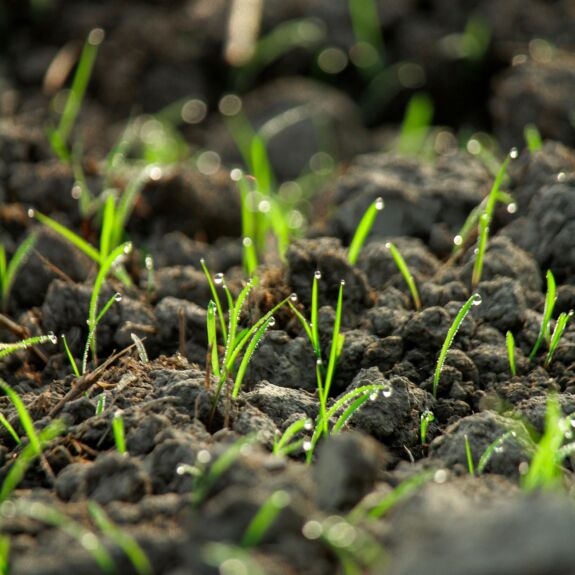
A sparse lawn cannot be fixed by overseeding alone. If the underlying cause is not addressed (compacted soil, thatch buildup, lack of light, irregular watering), new seeds may germinate and then disappear. Before overseeding, several essential steps are needed to maximize your chances of achieving a dense and uniform lawn.
Diagnosing the cause (the “why” before the “how”)
Before touching any seeds, it is recommended to carefully observe your lawn:
- Very hard soil with water pooling or runoff: soil compaction, poor oxygen for roots
- Brown, spongy layer on top of the soil: excessive thatch buildup
- Shaded areas (under trees, north side): lack of light and strong root competition
- Yellow patches, round spots, or “burnt” appearance: water stress, fungal disease, or pet urine
- High presence of weeds: weakened lawn and exposed soil
- Soil that stays soggy after rain: poor drainage
Practical tip
Do the screwdriver test. If it is difficult to push a screwdriver into dry soil, lawn aeration is often a priority.
Cleaning and preparing the surface (seed-to-soil contact)
For overseeding to work, seeds must make direct contact with soil, not thatch.
- Rake to remove debris, leaves, and dead grass
- Lightly thin out sparse areas to expose soil
- Level small uneven spots to avoid puddles that can wash away seeds
Correcting common issues: compaction and thatch
Lawn aeration: often an essential step
When soil is compacted, core aeration is strongly recommended before overseeding. It improves:
- Root oxygenation
- Water infiltration
- Establishment of new seedlings
Best timing: spring or late summer / early fall, which is often ideal in Quebec.
After aeration: the holes also help seeds integrate into the soil
Dethatching: when thatch is suffocating the lawn
Excess thatch acts as a barrier. Water and seeds can no longer reach the soil. Moderate dethatching before overseeding can make a significant difference when the layer is thick.
Improving the soil: topdressing and pH if needed
Poor soil, whether too sandy or too clay-heavy, slows down grass establishment.
- Light topdressing: apply 0.5 to 1 cm of screened compost or quality planting soil over thin areas, ideally after aeration
- Soil test: if pH is too acidic or nutrients are lacking, it is better to correct the soil before investing in seeds
Goal
Create a fine, slightly moist, and nutrient-rich seedbed to support germination.
Removing competition before overseeding
Seeding in an overgrown area often means competing against obstacles.
- Weeds: remove them manually in target areas
- Herbicides: avoid applying products before seeding, as many require waiting periods
- Traffic: limit foot traffic during establishment
- Shade: in heavily shaded areas, use shade-tolerant seed mixes and improve light if possible (light pruning)
Adjusting mowing and watering before seeding
Before overseeding, prepare the lawn for establishment.
Mowing
Slightly lower height before seeding, without scalping. Afterwards, 6–8 cm helps retain moisture and reduce weeds
Watering
Maintain consistent moisture. In normal maintenance, about 2.5 cm per week is ideal, but during germination, the surface must not dry out (more frequent, lighter watering at first)
Choosing the right time to overseed
Timing is often more important than seed selection.
Late summer to early fall
Warm soil, cooler nights, less weed pressure, better establishment.
Spring
Possible, but requires more maintenance due to rapid heat and weed competition.
Checklist: are you ready to overseed?
Before seeding, make sure:
- Soil is visible and not only covered with thatch
- Lawn is aerated if soil is compacted
- Thatch is reduced if necessary
- Light topdressing is planned if soil is poor
- Watering schedule is ready
- Mowing and traffic are controlled
Why choose Vertdure to restore your lawn
A thin lawn often hides deeper issues: compacted soil, thatch buildup, weeds, or environmental stress. Vertdure experts can assess your lawn and recommend the right actions at the right time, such as aeration, dethatching, fertilization, and targeted strategies to permanently thicken your grass.
Before overseeding, three priorities matter most: diagnose the issue, prepare proper seed-to-soil contact, and correct compaction and thatch. Only then can overseeding truly transform a thin lawn into a dense, green, and resilient yard. Contact us for a quote or explore our lawn care packages to rebuild your lawn on a strong foundation.
Related articles
Best Grasses to Plant in Quebec
Having a luscious green lawn in Quebec can be challenging due to the harsh winters. Find out which cool-season grasses are best for your lawn!

When to Sow your Lawn?
When to sow your lawn in Quebec? Here are some tips for determining the ideal period to sow your new grass in the regions of Quebec.